Smart Film vs Smart Glass: Which Should You Choose?
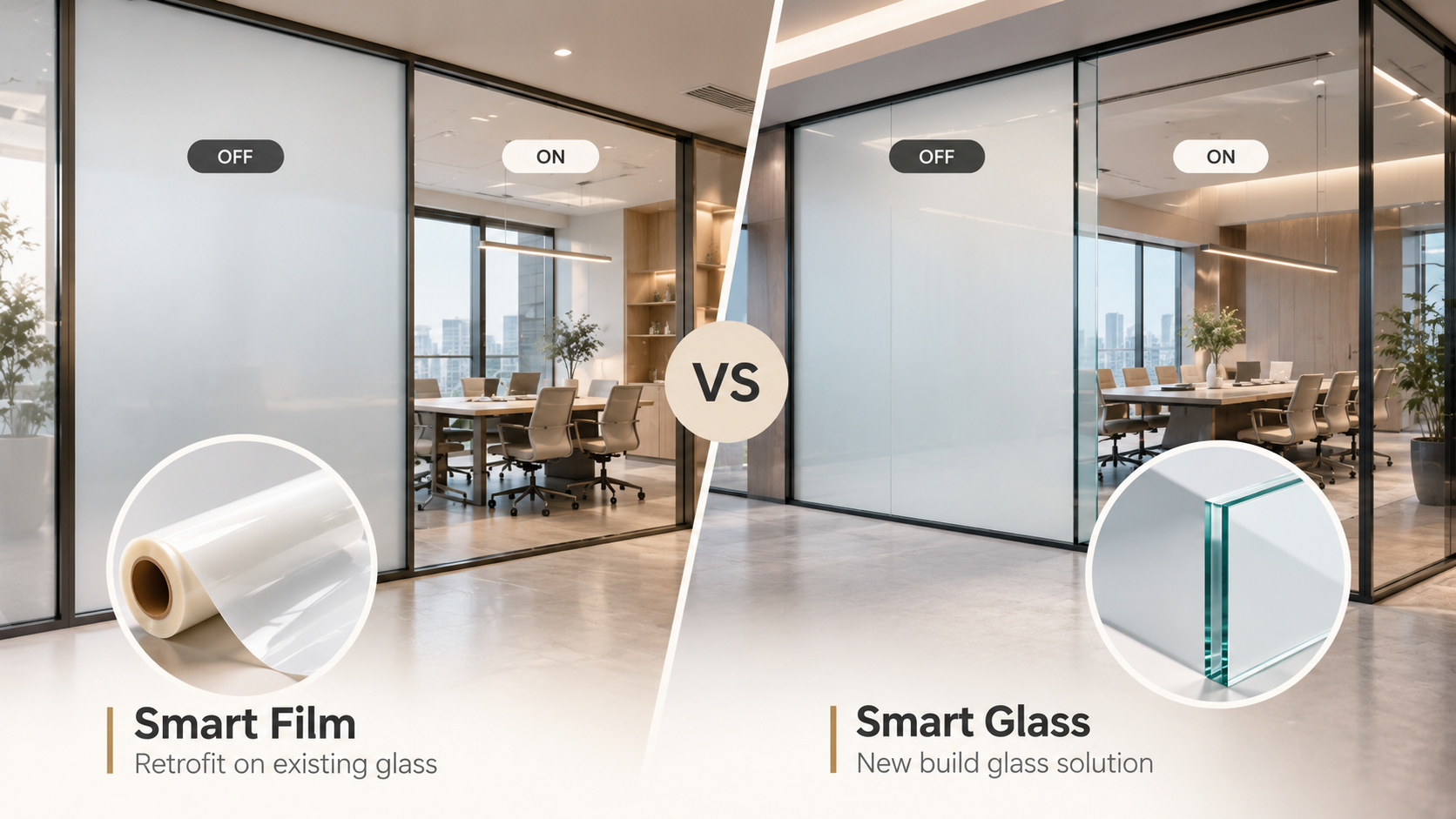
Smart Film and Smart Glass both provide switchable privacy using PDLC technology, but they are designed for different project situations. Smart Film is applied to suitable existing glass, making it a practical choice for retrofit projects. Smart Glass is manufactured as a complete laminated glass panel and is generally more suitable when new glass is being installed or existing glass is already being replaced.
The easiest way to decide is:
Keeping suitable existing glass? Consider Smart Film.
Installing or replacing the glass? Consider Smart Glass.
Both can switch between clearer and frosted privacy states.
The real difference is how the technology is integrated into the glass and where each solution makes the most sense.
What Is Smart Film?
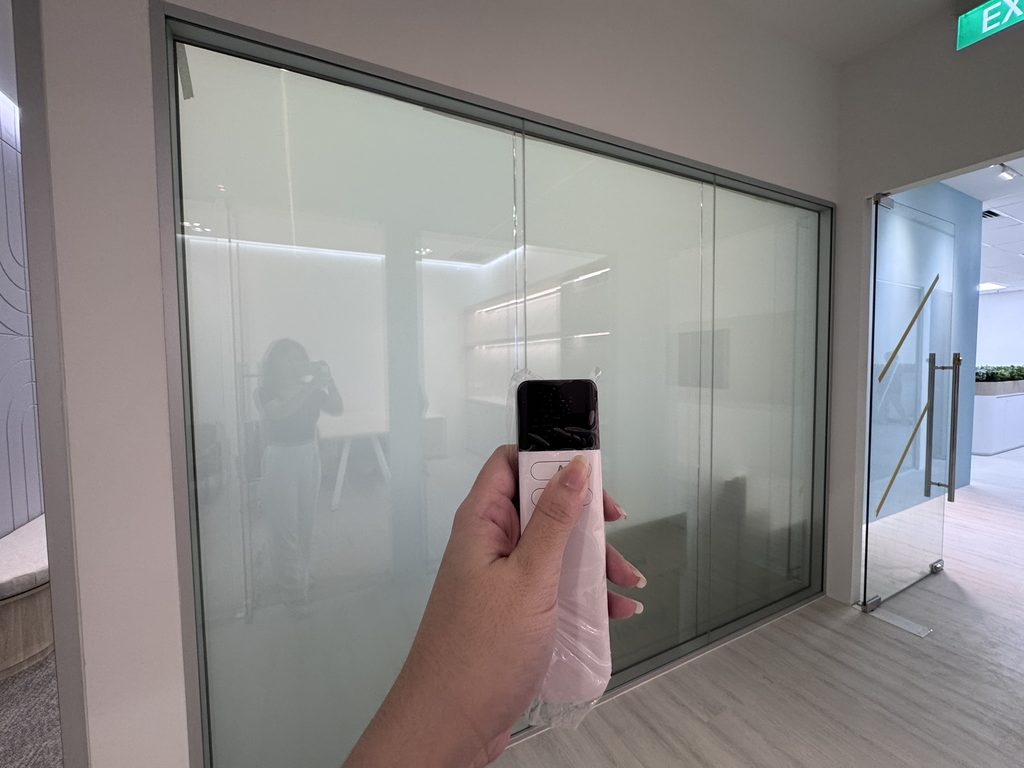
Smart Film is an electrically controlled PDLC privacy film applied directly onto suitable existing glass. Our guide on what is smart film covers how the technology behaves in more detail.
PDLC stands for Polymer Dispersed Liquid Crystal.
When power is switched on, the liquid crystals align and the film becomes more transparent.
When the power is switched off, the crystals scatter light and the glass appears frosted.
Because Smart Film is applied to the surface of existing glass, the original glass panel can usually remain in place when it is suitable for installation.
This makes Smart Film particularly useful for upgrading:
- Existing office meeting rooms
- Glass partitions
- Director rooms
- Clinics
- Consultation rooms
- Residential windows
- Glass doors
You can see the full range of smart film in Singapore on our service page.
What Is Smart Glass?
Smart Glass provides a similar clear-to-private function, but the construction is different.
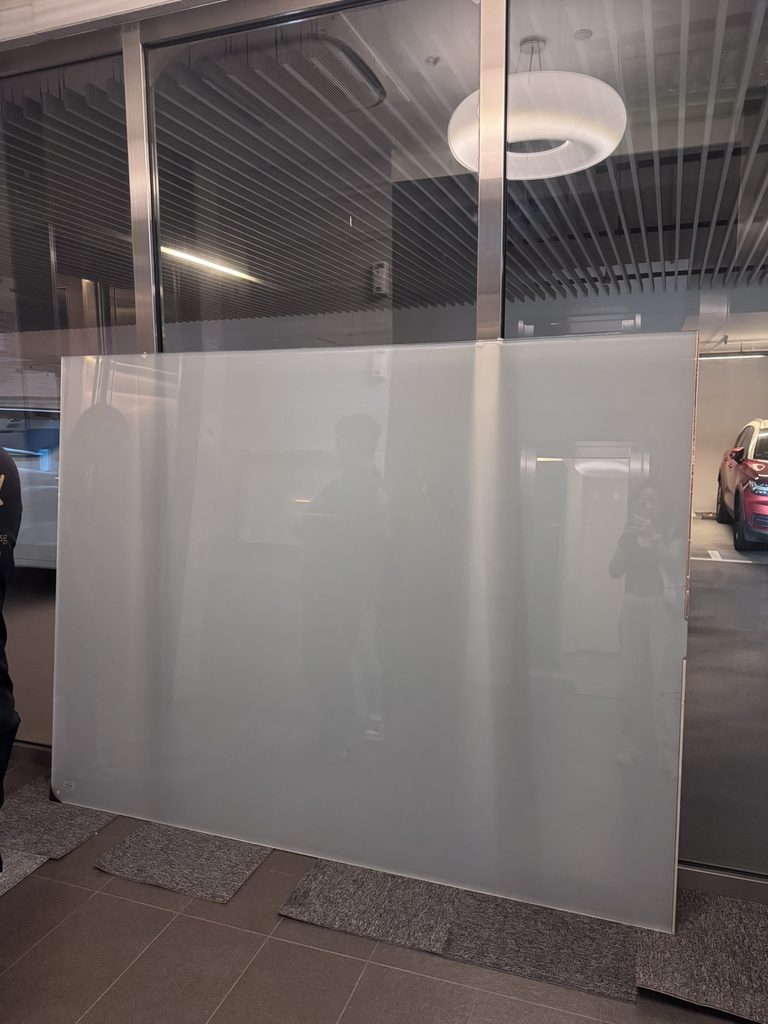
Instead of applying the PDLC layer onto existing glass, the switching layer is laminated inside a new glass panel.
This creates an integrated glass system.
Smart Glass is therefore commonly considered when:
- New glass partitions are being installed
- Existing glass already needs replacement
- A renovation involves new glazing
- An integrated glass finish is preferred
The privacy technology becomes part of the glass construction rather than an applied surface film. See our smart glass in Singapore page for the available configurations.
Smart Film vs Smart Glass: Quick Comparison
| Consideration | Smart Film | Smart Glass |
|---|---|---|
| Installation | Applied onto suitable existing glass | Installed as a new laminated glass panel |
| Best for | Retrofit projects | New glass or glass replacement |
| Existing glass | Can usually remain when suitable | Normally replaced |
| PDLC layer | Applied to glass surface | Laminated inside the glass |
| Finish | Professional applied-film finish | Integrated glass finish |
| Electrical supply | Required | Required |
| Clear / frosted switching | Yes | Yes |
| Renovation impact | Usually lower if existing glass stays | Requires new glass fabrication and installation |
| Good choice when | You want to upgrade existing glass | You are already installing or replacing glass |
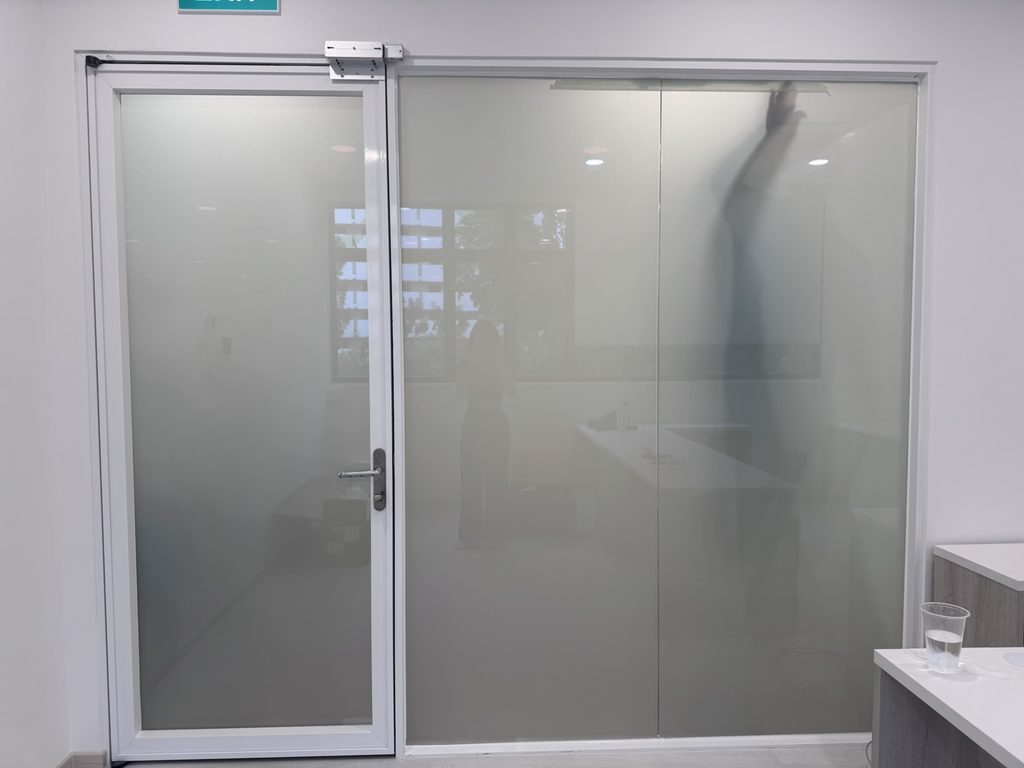
1. Existing Glass: This Is Usually the First Question
The condition of the existing glass is one of the easiest ways to narrow down the choice.
Choose Smart Film when keeping the existing glass
If the existing glass:
- Is in suitable condition
- Fits the required layout
- Does not need replacement
- Only needs additional privacy functionality
Smart Film may be the more practical option.
Instead of removing the glass, the film can be applied to the existing surface.
Before installation, the glass should still be assessed for:
- Cracks
- Chips
- Existing films
- Surface condition
- Dimensions
- Installation environment
Consider Smart Glass when replacing the glass
If the project already requires new glass, installing Smart Film onto a newly installed ordinary panel may not always be the most logical route.
Smart Glass allows the PDLC layer to be incorporated directly into the new glass.
This can make sense for:
- New office fit-outs
- New meeting rooms
- New residential glass partitions
- Major renovations
- Glass replacement projects
2. Appearance and Finish
Both solutions provide switchable privacy, but their construction affects the finished appearance.
Smart Film sits on the glass surface.
A professional installation should consider:
- Film edges
- Electrical connections
- Wiring
- Glass frames
- Controller location
Smart Glass contains the switching layer inside the laminated glass panel, creating a more integrated finish.
For projects where architectural detailing is especially important and new glass is already being fabricated, Smart Glass may have an advantage.
For existing glass that is otherwise perfectly usable, replacing everything simply to achieve that integrated construction may be unnecessary.
3. Installation and Renovation Requirements
Smart Film normally requires less glass-related work because the existing panel can stay in place.
Installation still requires planning for:
- Glass preparation
- Electrical supply
- Wiring
- Transformer or controller
- Switch or remote control
Our Smart Film installation guide sets out what to check before works begin.
Smart Glass requires a different process because the complete glass panel needs to be fabricated, delivered and installed.
The project may therefore need to coordinate:
- Glass dimensions
- Glass removal where applicable
- New panel fabrication
- Frames or fittings
- Electrical connections
- Installation access
This is why project stage matters.
If the office or home is already completed, Smart Film may be easier to retrofit.
If renovation is still underway and new glass is planned anyway, Smart Glass may make more sense.
4. Privacy Performance
Both Smart Film and Smart Glass using PDLC technology can switch between:
Power On → clearer state
Power Off → frosted privacy state
In privacy mode, light is scattered so direct visibility through the glass is reduced while daylight can still pass through.
However, neither solution should automatically be treated as:
- Complete blackout
- Soundproofing
- Acoustic privacy
If the room needs confidential conversations, the acoustic performance of the glass, doors and surrounding partitions should also be considered.
If you are weighing switchable privacy against a permanent option, our comparison of Smart Film vs Frosted Film covers that decision.
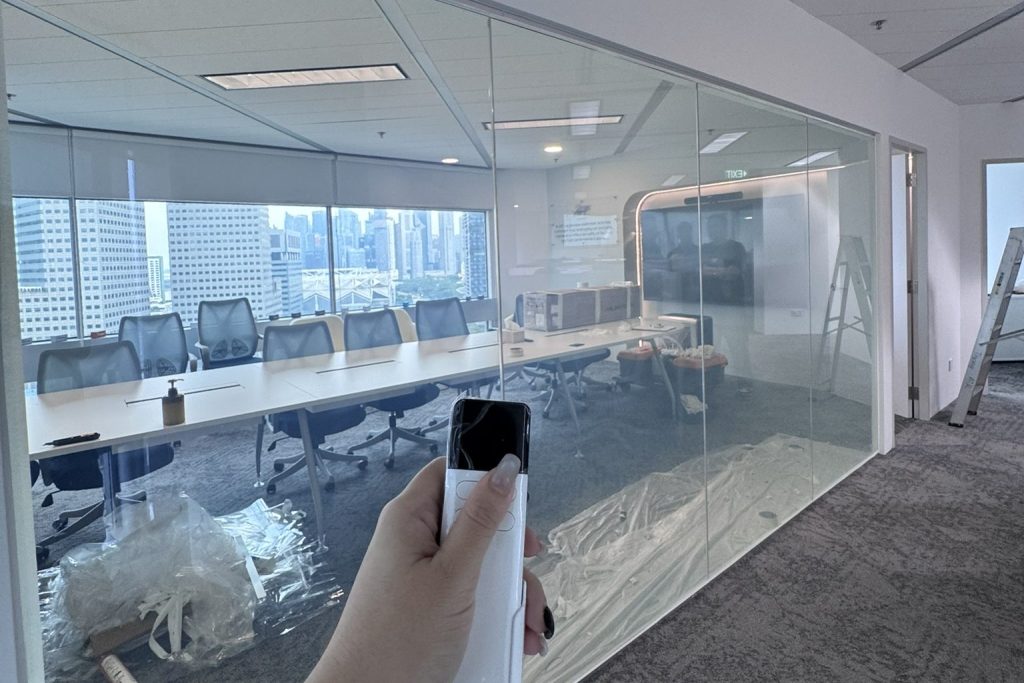
5. Which Is Better for Office Meeting Rooms?
Both can work well.
The better choice depends largely on the existing glass.
Existing meeting room glass
If the meeting room already has suitable glass partitions, Smart Film can add switchable privacy without replacing the whole glass system.
New meeting room
If a new glass meeting room is being created during an office fit-out, Smart Glass can be considered as part of the new glazing specification.
Both allow a meeting room to remain visually open when privacy is not needed and become frosted for:
- HR discussions
- Management meetings
- Interviews
- Client meetings
- Confidential conversations
6. Which Is Better for Homes?
The same principle applies to residential projects.
Smart Film can be practical when homeowners already have suitable glass and want to upgrade it.
Potential applications include:
- Bedrooms
- Study rooms
- Internal glass doors
- Existing windows
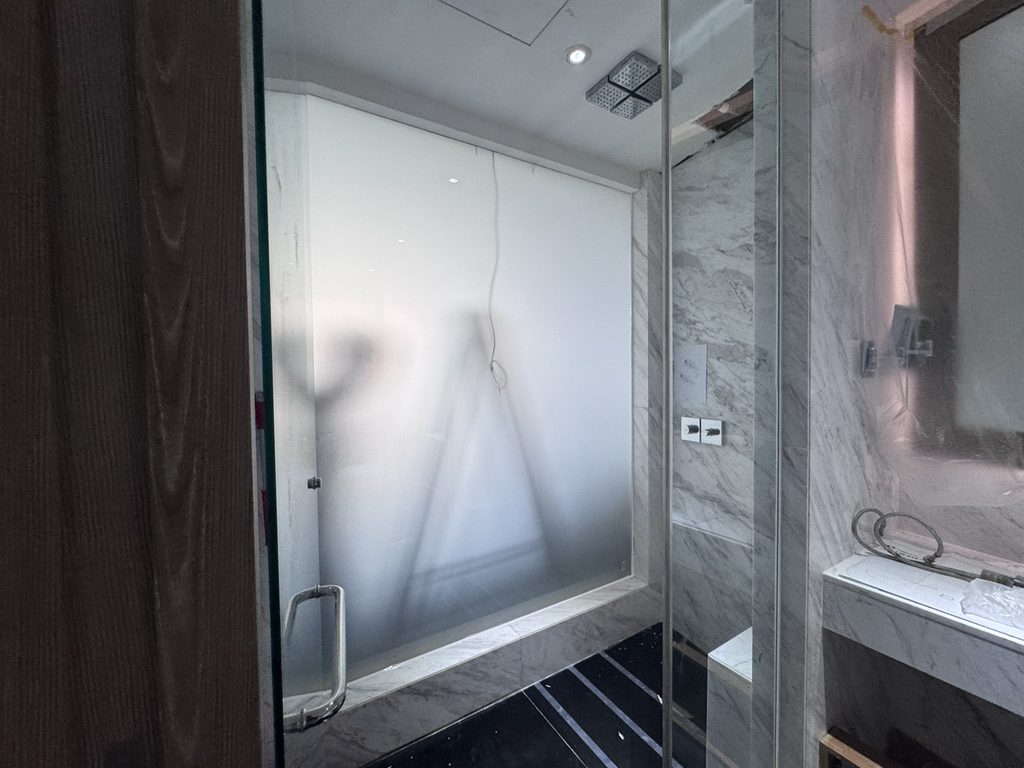
Smart Glass may be more appropriate when the renovation already involves new:
- Bathroom glass
- Bedroom partitions
- Internal glass walls
- Doors or windows
Wet-area suitability, electrical planning and the selected product specification should always be assessed before installation.
7. Which Option Costs More?
There is no useful single price that applies to every project.
Smart Film pricing can depend on:
- Glass dimensions
- Film specification
- Quantity
- Wiring
- Controls
- Installation conditions
Smart Glass pricing can depend on:
- Glass dimensions
- Glass construction
- PDLC specification
- Quantity
- Fabrication
- Hardware
- Delivery
- Installation conditions
Smart Glass generally involves fabrication and installation of an entire glass panel, while Smart Film uses suitable existing glass.
However, the better comparison is not simply:
Which product is cheaper?
It is:
What work does the project already require?
If good glass is already installed, Smart Film can avoid unnecessary glass replacement.
If new glass is already required, Smart Glass can integrate the switching technology directly into that new glazing.
Smart Film or Smart Glass: Which Should You Choose?
Use this simple decision guide.
Choose Smart Film if:
- You want to retain suitable existing glass
- You are upgrading an existing office or home
- You need switchable privacy without replacing the full panel
- Retrofit practicality is important
Consider Smart Glass if:
- You are installing new glass
- Existing glass already needs replacement
- The project is undergoing a major renovation or fit-out
- You prefer the PDLC layer integrated within the glass construction
The right choice is therefore determined less by which technology sounds more impressive and more by where your project is starting from.
Frequently Asked Questions
Is Smart Film the same as Smart Glass?
No. Both can use PDLC technology to switch between clearer and frosted states, but their construction is different. Smart Film is applied to the surface of suitable existing glass, while Smart Glass incorporates the PDLC layer within a laminated glass panel.
Is Smart Film suitable for existing glass?
Yes, Smart Film is primarily suitable for retrofitting compatible existing glass. The glass condition, dimensions and installation environment should be checked before installation.
Does Smart Glass require replacing my existing glass?
Yes, if you are retrofitting an existing space with Smart Glass, the existing glass would normally need to be replaced because Smart Glass itself is the complete switchable glass panel.
Do Smart Film and Smart Glass both need electricity?
Yes. PDLC Smart Film and Smart Glass require electrical power to remain in their clearer state. When power is removed, they normally return to their frosted privacy state.
Which is better for an office renovation?
If suitable existing glass is being retained, Smart Film may be more practical. If the renovation already includes new glass partitions or glass replacement, Smart Glass may make more sense.
Which one gives better privacy?
Both are designed to provide switchable visual privacy in their frosted state. The appropriate choice should be based mainly on installation method, glass condition, project stage and required finish rather than assuming one automatically provides more privacy.
Final Thoughts
Smart Film and Smart Glass solve the same basic problem:
You want glass when you want openness and privacy when you need it.
But they solve it in different ways.
The simplest rule is:
Existing suitable glass → Smart Film
New or replacement glass → Smart Glass
At Smart Glass Solution we provide both options, because forcing every project into the same product would be convenient for us and unhelpful for everyone else.
The right starting point is to review:
- Existing glass condition
- Project stage
- Glass dimensions
- Desired finish
- Electrical access
- Privacy requirements
Not sure whether Smart Film or Smart Glass suits your project?
Send Smart Glass Solution your glass photos, approximate dimensions and project requirements. Our team can assess whether keeping your existing glass with Smart Film or installing Smart Glass makes more sense. Contact Smart Glass Solution to get started.